
FIHS 2026
An interactive seminar on the current challenges of STEM fields and beyond, for the first time in Prague!

Information for the upcoming event
The sixth FIHS will be held during July 31 – August 1 in Prague. However, you can rest assured there will be an option for cozy homestay, as always. 😉
Registration is NOW CLOSED for listeners as well as speakers.
We are prepared if you want to stay overnight.
Important dates
Further dates will be announced later.
Friday July 31 2026 14:00
Start of the event. At 14:15 the first lecture starts.
Saturday August 1 2026 20:00
Joint dinner and end of the event at 20:00.
Speakers at FIHS 2026:
Speakers
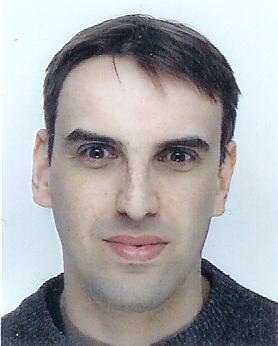
From random walks, trees, and graphs to tilings, permutations, and partitions, combinatorial structures permeate diverse disciplines like computer science, bioinformatics, probability, economics, and physics. A fundamental challenge in these domains is counting structures of a specific size and characterizing their behavior at a large scale. The key to unlocking these problems lies in the elegant interplay between power series (generating functions) and complex analysis. (For a brilliant deep dive into this subject, we highly recommend Flajolet and Sedgewick's Analytic Combinatorics, freely available online.) This presentation offers a hands-on introduction to these techniques. By revisiting classic sequences (including prime numbers, Fibonacci numbers, and Catalan and Motzkin numbers) we will illustrate how to use modern computer algebra tools to derive beautiful exact and asymptotic formulas.

Co₃O₄ is a promising catalyst for many chemical reactions, that have potential to be applied for efficient energy storage. Latest studies proved that Ce modification significantly improves Co₃O₄ catalytic activity towards oxygen evolution reaction (OER) [2] [3] and ammonium perchlorate decomposition [4]. Other studies discovered that Ce modification also improves Co₃O₄ thermal stability [4], [5] and chemical stability [6]. In order to obtain better understanding of the Ce modification effect, we are going to have a close look at the processes inside the combined CeOₓ/Co₃O₄ structure, their dependence on Ce amount and their reaction to high temperature treatment. This lecture is extending my lecture from last year but the presented data will have zero overlap with the data I presented last year. [1] 10.1016/j.jcat.2009.11.013 [2] 10.1021/acs.inorgchem.3c03592 [3] 10.1002/adfm.202502122 [4] 10.1002/smll.73583 [5] 10.1016/j.apsusc.2022.153430 [6] 10.1016/j.apcatb.2024.124389
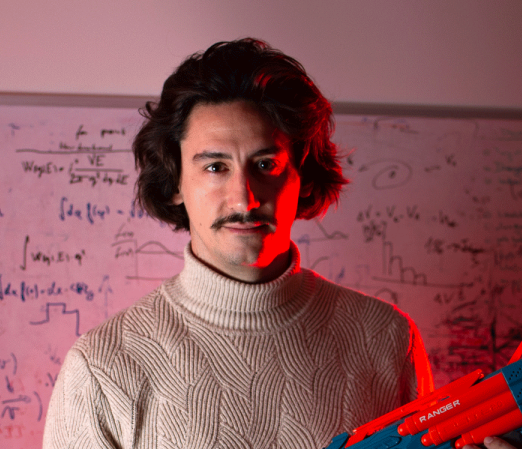
The detection of dark matter has attracted a lot of attention in the past decades. The absence of a convincing signal motivates us to search for novel detection techniques with a lower detection threshold. These would enable us to access unexplored regions of parameter space, formerly inaccessible to our technology. Chiral phonons offer a promising avenue for constructing a new type of quantum sensor with record-breaking energy sensitivity. This would allow for vast applications in particle physics experiments and for a better understanding of phononic transport mechanisms within solid-state physics.

Many exact counting problems suffer the feared combinatorial explosion. As a toy model, consider a (non-overlapping) domino tiling of the standard 8×8 chess board. In total, there are Z(8,8) = 12,988,816 of all such tilings. For a general n×n board, the total number Z(n,n) of all tilings grows exponentially with the size of the board. More concretely, we have ln(Z(n,n)) ≈ C n² with C ≈ 0.29156. Hence, counting the exact number of tilings quickly becomes infeasible. However, by tying dimer tilings with pffafians, Kasteleyn showed that C = G/π, where G = Σ (−1)ⁿ/(2n+1)² (n=0→∞) ≈ 0.9159655941 is the Catalan's constant. Unfortunately, Kasteleyn method is only applicable for dimers and for special lattices. An alternative and more general approach (although only numerical) is by generating the tiles randomly (allowing overlaps) and keeping track of their interactions. The resulting structure is amenable by means of the so called Cluster Expansion Technique (CET). In our talk, we introduce the technique and apply it on the problem of counting all domino tilings in n×n boards, deducing the constant C numerically. We would also like to address the effect of the boundary conditions, which play a non-negligible role as shown in the exact expansion of Allegra.


Gaussian free field as an elaborated topic of mathematical physics was thorougly investigated in 70s and 80s because of its connection to quantum field theory. We are going to talk about the frequent probability density exponent for GFF which are the Dirichlet quadratic forms. With the use of elementary algebra we discover the concept has its uses in the research of random walks, image processing and potential fields (as demonstrated in Coulomb and Yukawa case).
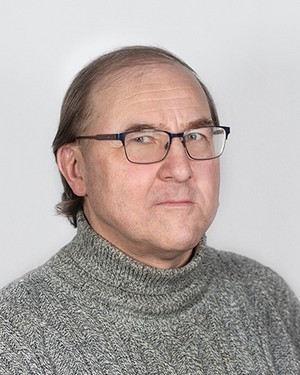
Topic taken from https://arxiv.org/pdf/1102.5733. This is an exposition of the theorem which says that the number of self-avoiding walks with n steps in the hexagonal lattice has asymptotics (2 cos(π/8))^(n+o(n)). We lift the key identity to formal level and simplify the part of the proof bounding the growth constant from below. In our calculation the lower bound comes from an identity asserting that a linear combination of 288 generating functions counting self-avoiding walks in a certain domain by length, final edge direction and winding number modulo 48 equals the geometric series ∑(2 cos(π/8))ⁿxⁿ for n≥1.

We keep hearing from all sides that we need to transition to post-quantum cryptography. But how exactly does a quantum computer threaten today’s encryption? We will introduce the basic idea behind Shor’s factoring algorithm and then Regev’s algorithm, which uses lattices to reduce the size of the quantum circuit needed to attack RSA. Shor: DOI 10.1137/S0097539795293172 Regev: DOI 10.48550/arXiv.2308.06572
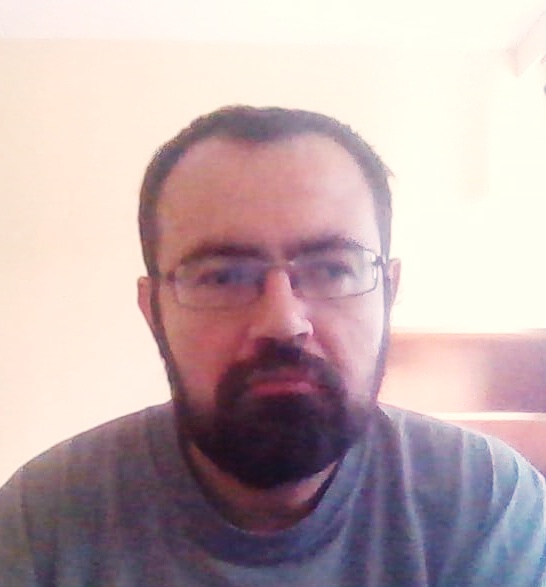
It's the topic of my PhD. studies. The well-known tensor product of vector spaces (space, whose basis is the cartesian product of bases of original spaces) can be generalized to another algebraic structures. In some categories of structures there is an algebra structure on every Hom-set such that this structure is object of that category and the Hom-functor becomes functor to that category. If in this case the tensor product exists, then for every object B the tensor functor – ⊗B is a left adjoint of the Hom(B, -) functor. We show that this category is symmetric monoidal closed.


